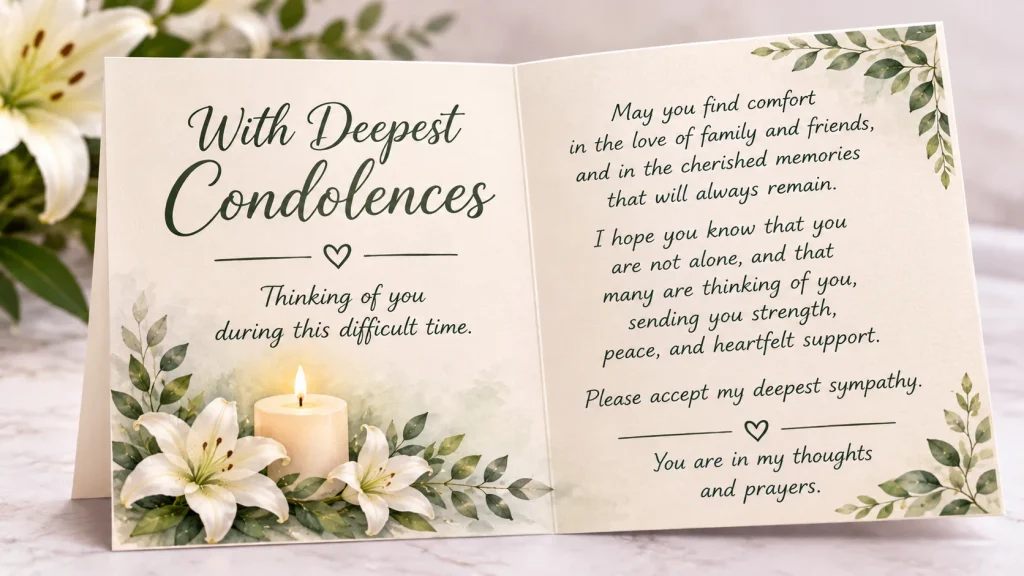

Knowing what to write in a condolence card is one of the hardest parts of showing up for someone who’s grieving. The card is small, the loss is large, and every sentence can feel either too little or too much. Many people stare at the blank space for a long time, then settle on something generic just to be done. Short is fine. Honest is better.
The good news is that the right words are usually simple. A suitable message depends on the occasion, the relationship, and the tone you want to set. A note to a close friend can be warm and personal. A card to a coworker can be short and polite. A message after a death needs the gentlest touch of all.
This guide starts with sympathy, since it’s the most delicate, then moves through birthday, wedding, thank-you, get-well, retirement, and family cards. Each section has sample messages you can copy, adapt, or save for later.
What to Write in a Condolence Card
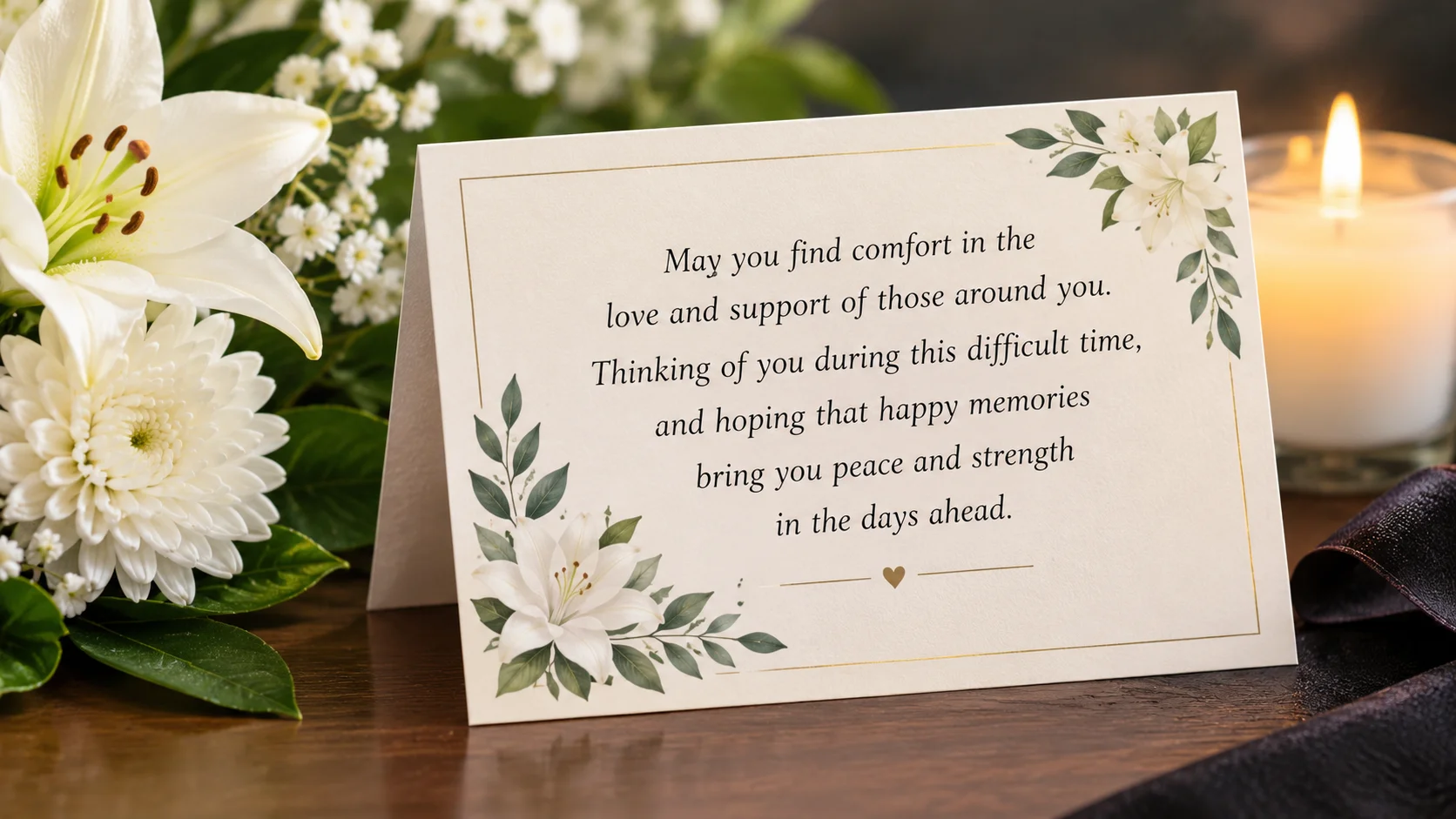
A condolence card has one job: letting someone know they aren’t alone. It doesn’t need to fix anything or explain anything. Plain words work best.
Keep the message focused on the person who is grieving. If you knew the person who died, use their name. Don’t describe how the family feels, since grief looks different for everyone. A simple pattern helps when you’re stuck on what to write in a condolence card: acknowledge the loss, offer care, and add one offer of help you’ll actually follow through on.
Short Condolence Messages
Sometimes a few lines are all that’s needed.
- “I’m so sorry for your loss. Thinking of you today and in the days ahead.”
- “Holding you and your family in my thoughts. There’s no need to reply.”
- “Sending you care and a quiet hug. I’m here whenever you’d like company or help.”
Messages When You Knew Them Well
When the loss touches you too, a shared memory gives the message weight. Keep it to one detail.
- “[Name] always made a room feel lighter. I’ll miss that laugh, and I’m grateful I knew them. Please call me if you need anything at all.”
- “[Name] was so kind to me when I was new to the group. I’ll carry that with me. Thinking of you with so much love.”
Faith-Based Wording
Religious wording fits only when the family clearly shares that faith. If they do, a simple line works: “May God comfort you and your family in the days ahead.” If there’s any doubt, stay with warm, general words like the ones above. That keeps the card kind without assuming anything about what the reader believes.
What to Leave Out
Skip lines such as “they’re in a better place” or “everything happens for a reason.” Even when they’re well meant, they can feel dismissive. The same goes for “at least they lived a long life.” The person reading has probably heard these already.
Here’s a useful rule when deciding what to write in a condolence card: if a sentence tries to explain the loss, cut it. If it simply offers care, keep it.
Birthday and Wedding Card Messages
Celebration cards leave more room for personality. The goal is still the same: sound like yourself.
What to Write in a Birthday Card
Birthdays leave room for humor, but the best messages still sound like the sender. Friends can be teased a little. Family usually appreciates something warmer.
- For a friend: “Happy birthday! Another year older, and you’re still the funniest person I know. Let’s celebrate soon.”
- For a daughter: “Happy birthday to my daughter. Watching you grow into yourself is the best part of my year. I’m proud of you every single day.”
- For anyone: “Wishing you a birthday full of good food, good people, and nothing on your to-do list.”
What to Write in a Wedding Card
Wedding messages work best when they’re short and look ahead. Use both names if you can; it shows the card was written for the couple, not for a stack of envelopes.
- “Congratulations to you both. May your marriage be full of laughter, patience, and plenty of ordinary good days.”
- “So happy for you, [Name] and [Name]. Wishing you a lifetime of love and teamwork.”
Thank-You, Get-Well, and Retirement Notes
Compared with what to write in a condolence card, a thank-you note is the easy one, because the content is already there. Name the gift or favor and say how it helped. That detail does most of the work.
- “Thank you for the scarf. It’s been getting daily use on these cold mornings, and I think of you each time I put it on.”
Get-well messages should be light and free of pressure. Avoid asking too many questions about the illness itself.
- “Thinking of you and hoping each day feels a little easier. Rest well, and tell me if you need anything.”
Retirement cards can mix appreciation with a little humor.
- “Congratulations on your retirement, [Name]. The office won’t be the same without your calm and your good humor. Enjoy every unhurried morning ahead.”
Holiday and Family Cards
Holiday cards often go to many people at once, which makes them easy to write on autopilot. A single added line fixes that. For family, one honest thing you appreciate about the person is usually enough.
- Mother’s Day: “Happy Mother’s Day. Thank you for the advice, the patience, and the home-cooked meals. I love you.”
- Father’s Day: “Happy Father’s Day, Dad. Thanks for showing up, every single time.”
- Valentine’s Day: “You make ordinary days better. Happy Valentine’s Day.”
- Baptism: “Congratulations to your family on [Name]’s baptism. Wishing [Name] a life surrounded by love and faith.”
Messages for family and friends can also be as short as one sentence. A card that says “Thinking of you” and carries a real signature still gets read.
Matching the Tone to the Relationship
Tone is where most card messages go wrong. A joke that works for a sibling can feel careless in a note to a manager. A formal line can feel cold in a card to a close friend.
Think about how you’d speak to the person face to face, then write that. Close friends and siblings can handle humor. Coworkers and neighbors usually prefer something warm and simple. For anyone who’s grieving, skip the humor unless the family has made clear that’s the mood.
How to Personalize Any Message
Start with one detail only you would know. A shared joke, a place you visited, a habit of theirs, or something they said once can turn a generic line into a personal one. That’s true for a birthday note, and it’s just as true for what to write in a condolence card.
A few other habits help:
- Use the person’s name at least once.
- Write the way you’d speak to them, not the way you think a card should sound.
- Read the message aloud before writing it in ink.
- Keep it honest; a plain sentence beats a polished one that doesn’t sound like you.
If the card is for someone who’s hurting, resist the urge to say everything. One kind sentence, plus an offer you’ll actually keep, is enough.
Final Verdict
Writing a card is less about perfect wording and more about showing up. A few honest sentences, a name, and one real detail will do more than a polished paragraph. Match the tone to the occasion, keep sympathy messages gentle, and leave out phrases that try to explain a loss. Whenever you’re unsure what to write in a condolence card, start with the simplest true thing: you’re thinking of them, and you’re sorry. Then offer help only if you mean it. Take a breath, write the first sincere line that comes to mind, and sign it with your own name. That’s usually enough, and it’s usually kept.