

Finding the right words for a card is harder than it looks. A few lines of ink can feel like a lot of pressure. Many people search for what to write in a card because a birthday note can’t sound like a sympathy note, and a wedding message shouldn’t read like a thank-you.
The good news is that a card doesn’t need a speech. It needs a clear feeling, a name, and one honest detail. The right words depend on three things: the occasion, the relationship, and the tone the writer wants to strike. A coworker’s retirement card calls for something different than a daughter’s graduation card, even though both are happy occasions. Plain and sincere wins every time.
Below, you’ll find a simple method for any card, followed by ready-to-use messages for the most common occasions and relationships. Short card messages sit alongside longer ones, so there’s something for a quick signature or a full handwritten note.
A Simple Method for What to Write in a Card
Most answers to what to write in a card follow the same three steps. Start with the person’s name and the occasion. Add one detail that only fits them. Close with a wish or a warm sign-off.
Short cards might use only two of those steps, and that’s fine.
Personal details keep a message from sounding generic. A shared memory, an inside joke, or a quality the person has shown works better than a string of adjectives. “Thanks for always picking up on the first ring” says more than “You’re a great friend.”
Tone matters too. Playful suits a friend’s birthday, gentle suits a loss, and polished suits a boss. When in doubt, simple and warm is safe.
What to Write in a Birthday Card
Birthday messages can lean light. Humor works for close friends, while sincerity works better for parents and older relatives.
For a friend: Happy birthday! Another year older and still the person everyone wants at the table. Hope today is all cake and no chores.
For a daughter: Watching you grow into who you are has been the best part of my years. Happy birthday, sweetheart. Proud of you today and always.
For a coworker: Happy birthday! Thanks for making the team better every day. Enjoy the day.
Short and quick: Wishing you a year full of good news.
What to Write in a Wedding Card
Wedding messages work best when they speak to both people and look ahead. Use both names if you know them, and mention something about the couple rather than marriage in general.
For a close friend: Seeing the two of you together just makes sense. Wishing you laughter, patience, and a lifetime of ordinary Tuesdays that feel like Saturdays.
More formal: Congratulations on your marriage. May the years ahead bring you steady joy and a home full of warmth.
Short: Congratulations to you both. So happy for you.
What to Write in a Thank-You Card
A good thank-you names the gift or the kind act and says what it did for the writer. That one detail is what makes it feel sincere.
For a meal: Thank you for the casserole. Not cooking this week took a weight off, and it tasted great.
For a gift: The scarf is already my favorite thing to wear. Thank you for thinking of me.
More formal: Thank you for your generous gift and for celebrating with us. It meant a great deal.
Graduation, Retirement, and New Baby Cards
These cards celebrate a change, so the best messages look backward briefly and forward warmly.
Graduation
Congratulations, graduate. All those late nights paid off. Can’t wait to see where this takes you.
Retirement
Congratulations on your retirement. Thank you for years of steady work and good humor. Enjoy every slow morning ahead.
New Baby or Baby Shower
Congratulations on your little one. Wishing you sleep, support, and plenty of cuddles.
Get-Well Wishes
Get-well cards should be light without ignoring the situation. Skip lines like “everything happens for a reason.” Offer comfort and no pressure instead.
Thinking of you and hoping each day feels a little better. No need to reply. Just rest.
What to Write in a Sympathy Card
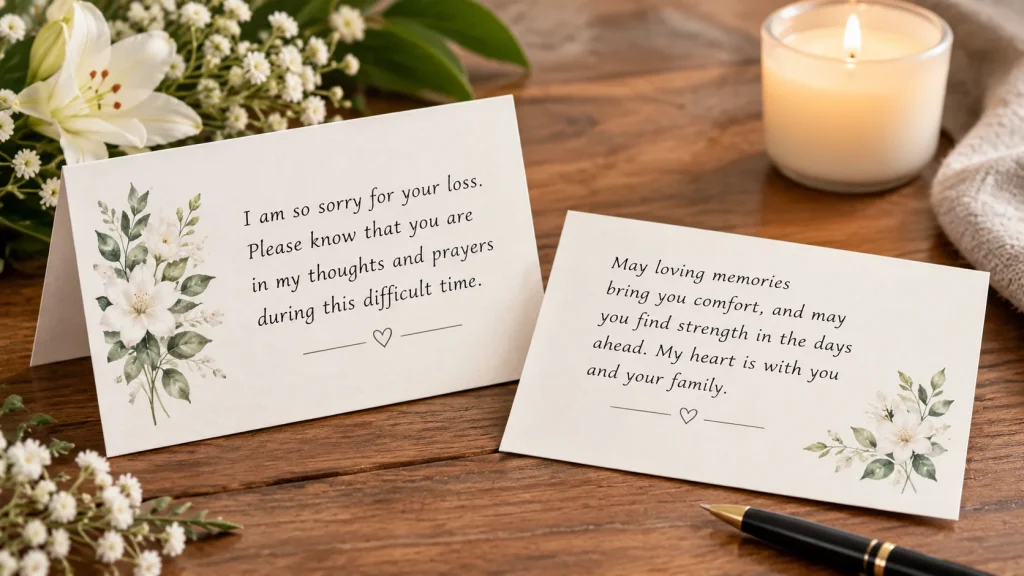
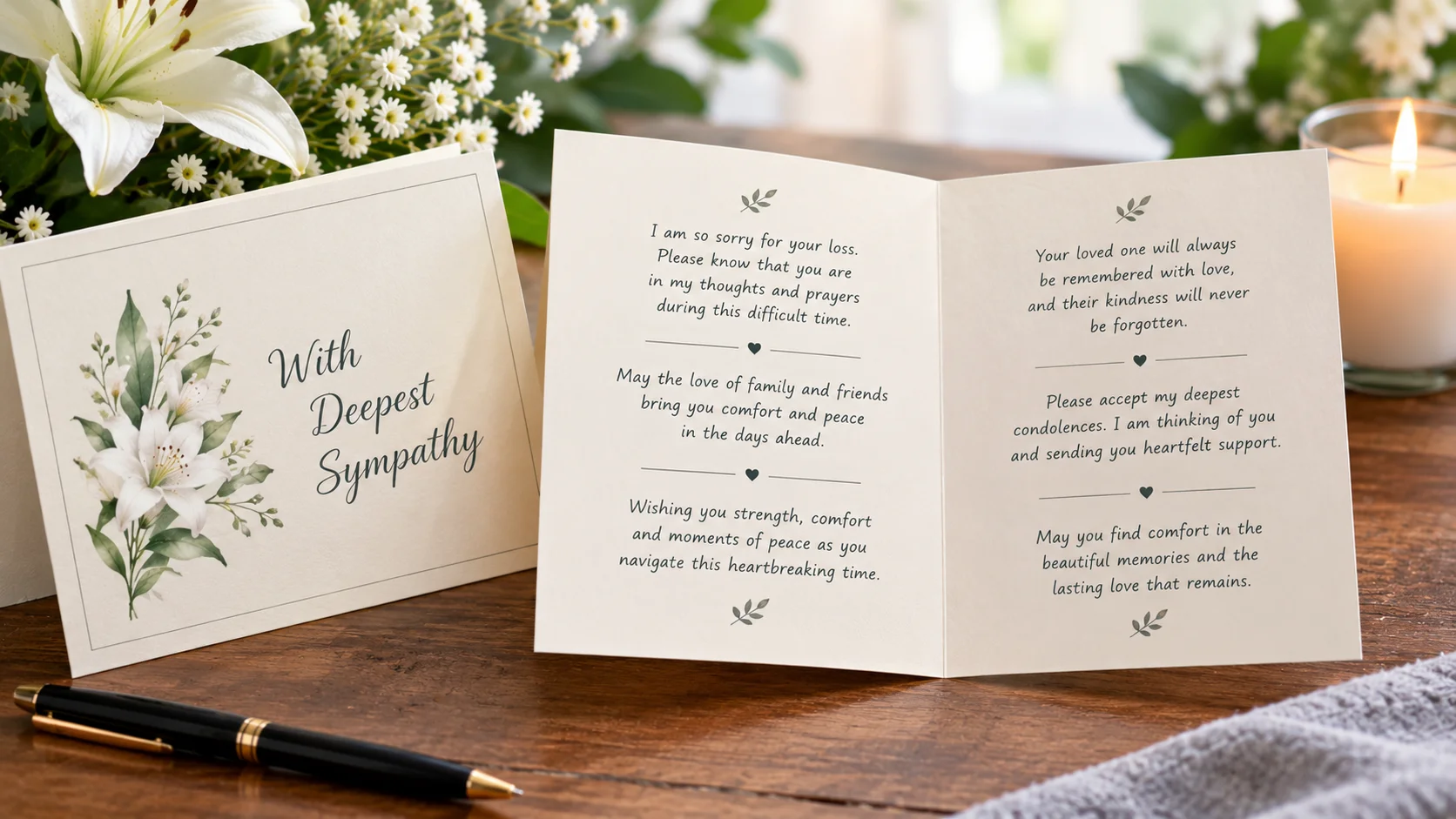
What to write in a card after a loss is the hardest version of the question, so gentler rules apply. Short, sincere messages are almost always better than long ones.
Where to Begin
Start with a simple acknowledgment, such as “I’m so sorry for your loss.” Use the name of the person who died when it’s known. If there’s a brief memory to share, include it. Offer help only when the offer is real.
“I don’t know what to say, but I’m thinking of you” is an honest line, and it’s allowed.
What to Avoid
Phrases like “they’re in a better place” or “at least they lived a long life” can feel dismissive. Telling someone how they feel or how long grief should last does the same. Faith-based wording belongs in a card only when the writer knows it matches the recipient’s beliefs.
Sample Sympathy Messages
General: I’m so sorry about Sam. Thinking of you and your family.
With a memory: I’ll always remember the way Sam laughed at his own jokes first. Holding you close in my thoughts.
With an offer: No need to answer this. I’ll drop off dinner on Thursday, and I’m here whenever you want company.
Faith-based: Keeping you in my prayers during this time.
For a coworker: Please accept my condolences. Take all the time you need. The team has everything covered.
Holiday and Family Cards
For messages for family and friends, what to write in a card often comes down to one honest line. Holidays and family days reward warmth over cleverness.
Mother’s Day: Thank you for every ordinary day you made feel safe. Happy Mother’s Day.
Father’s Day: Thanks for the rides, the advice, and the quiet example. Happy Father’s Day.
Valentine’s Day: Still choosing you, every day. Happy Valentine’s Day.
Baptism: Congratulations on Ella’s baptism. Wishing your family joy and blessings today.
Final Verdict
Knowing what to write in a card comes down to a few habits: name the person, mention one real detail, and close with a sincere wish. Tone should fit the occasion, and a short message beats a long one that sounds forced. Sympathy cards need the most care, so gentle and simple works best.
Pick one sample from this list and change a few words so it sounds like the sender. Then write it by hand, sign it, and send it. A card that arrives with honest words, even a few, usually matters more than a perfectly worded one that never gets mailed.

Pingback: What to Write in a Wedding Card: Messages for Couples,
Pingback: What to Write in a Christmas Card: Message Ideas for Family
Pingback: What to Write in a Birthday Card for a Friend Short Messages
Pingback: What to Write in a Thank You Card: Messages for Gifts, Favor
Pingback: What to Write in a Mothers Day Card: Messages for Moms
Pingback: What to Write in a Holiday Card: Messages for Every Name
Pingback: What to Say in a Wedding Card: Messages for Every Guest
Pingback: What to Say in a Birthday Card: Messages for Parents, Kids
Pingback: What to Say in a Baby Shower Card: Messages