
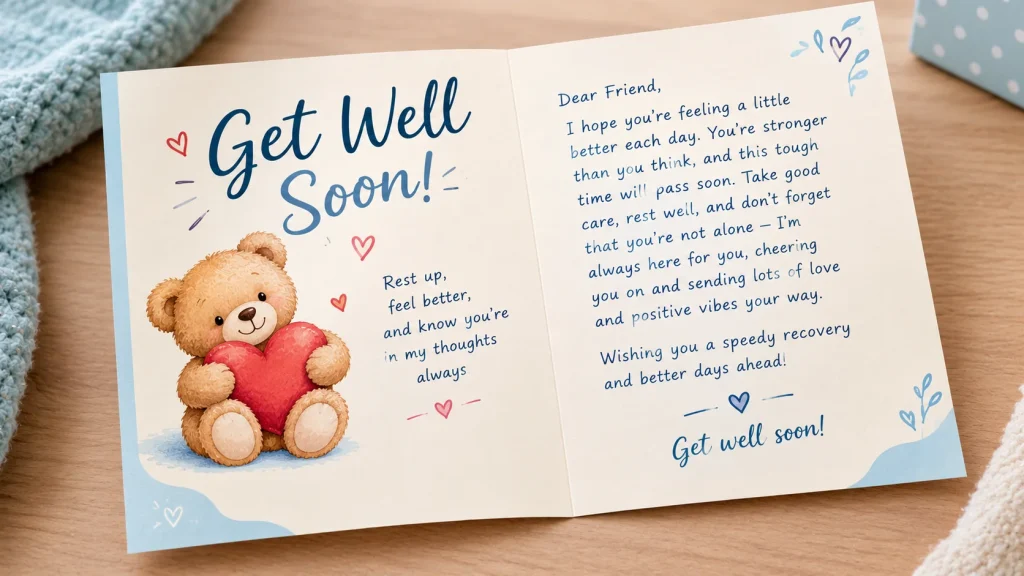

Knowing what to write in a get well card is harder than it sounds. The person reading it is tired, uncomfortable, or worried, and a few lines of ink have to lift their mood without brushing past what they’re going through. Too cheerful can sound dismissive. Too serious can feel heavy.
The wording depends on three things: how sick the person is, how close the relationship is, and how the person usually handles a rough patch. A cold calls for a joke and a blanket reference. A long recovery calls for something quieter. A hospital stay falls somewhere in between.
Below, the guidance is sorted by situation first, then by relationship. Each section includes ready-to-use lines, plus notes on which phrases to avoid. Most messages here are two or three sentences, because a sick reader doesn’t need a letter. They need to know someone’s thinking of them. That’s the standard worth aiming for. Any of the lines can be copied as written or adjusted in a minute.
How to Decide What to Write in a Get Well Card
Three quick questions settle most of the wording.
First, is the recovery expected to be quick? If so, light humor is fine. Second, is the situation serious or unclear? Then plain, steady words work better than cheer. Third, does the person enjoy jokes? When unsure, warm beats funny.
Anyone stuck on what to write in a get well card can answer those three and let the rest follow. A name at the bottom helps too. A card with no signature leaves the reader guessing.
Messages for a Cold, Flu, or Minor Injury
Nobody’s truly worried here, so a little teasing works.
- Heard you’re under the weather. Rest, fluids, and zero guilt about the inbox.
- Sorry you’re feeling rotten. Hope the couch is comfy and the remote works.
- Doctor’s orders: soup, sleep, and no heroics.
- A sprained ankle is just the universe telling you to put your feet up.
Two lines are enough.
Messages for Surgery or a Hospital Stay
Timing shapes the wording. Before a procedure, a card says “thinking of you.” Afterward, it says “hope recovery is going smoothly.” Either works.
Keep the focus on comfort and patience, not medical details. Skip questions about the diagnosis. The patient will share what they want to.
- Thinking of you today. Wishing you a calm procedure and an easy recovery.
- Take your time healing. Nobody’s keeping score.
- Hope the hospital food is better than its reputation. Visiting soon, with snacks.
- No need to reply to this. Just rest.
Recovery can feel long and dull, so a promise of a visit or a call gives the person something to look forward to.
Messages for a Long or Uncertain Recovery
This is where “get well soon” can backfire. If recovery isn’t soon, the phrase can sound like a deadline. “Thinking of you” is gentler, and it’s always true.
For a long illness, what to write in a get well card comes down to presence. Skip “everything happens for a reason” and “stay positive.” Those lines can make a tired person feel like they’re failing at being sick.
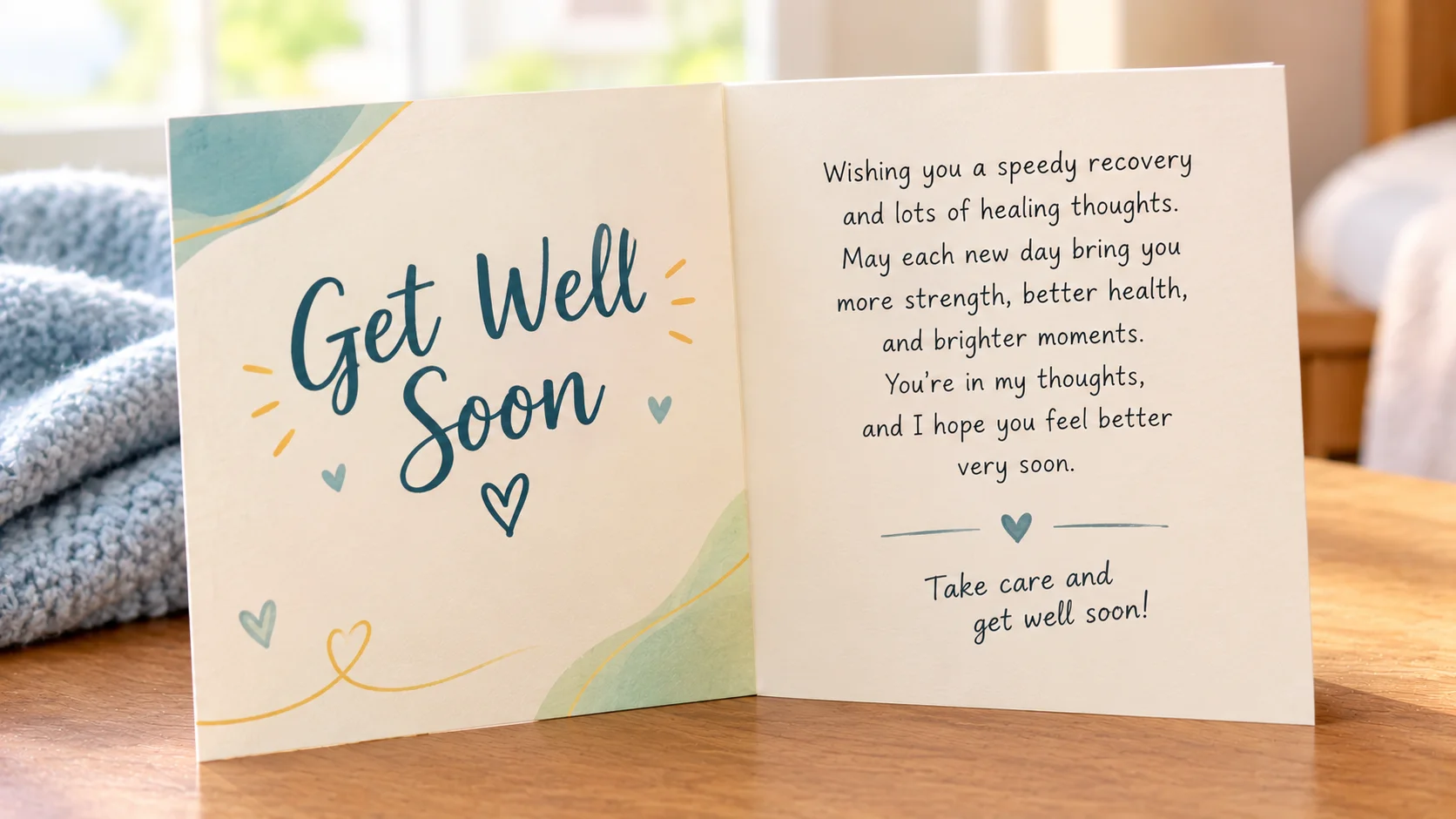
- Thinking of you today. No need to reply, and no need to be brave for anyone.
- Hoping today has a few good minutes in it.
- Not asking for an update. Just sending care.
- You don’t have to say anything back. You’re not alone in this.
Illnesses nobody can see, such as burnout or depression, belong in this group too. “Take whatever time you need. Glad you’re in my life” tells the person they aren’t a burden.
Messages by Relationship
Closeness changes the voice, even when the situation stays the same.
For a Friend
- Hate that you’re going through this. Text me when you want company, a ride, or a terrible movie.
- You’ve shown up for me more times than I can count. Let me do the same now.
For a Partner
- Not the way either of us planned the week. I’ll be right here, with tea and bad TV.
For a Parent or Grandparent
- Thinking of you, Mom. Thank you for every time you took care of me. I’m glad to return it.
- Get well soon, Grandpa. The house is quieter without your stories.
For a Child
- Feel better soon, buddy. When you’re all healed, we’re having a pizza party.
For a Coworker or Neighbor
For colleagues, what to write in a get well card should stay warm and brief. Skip any mention of workload.
- Hope you’re feeling better soon. Please don’t think about work. Everything’s covered.
- Sorry to hear you’ve been unwell. Thinking of you and wishing you a steady recovery.
Group cards leave room for one sentence. “Get well soon, Priya. The team says hello” does the job.
Phrases to Swap Out
Some common lines miss the mark. Small swaps help.
- Instead of “Everything happens for a reason,” try “Thinking of you.”
- Instead of “Stay strong,” try “You don’t have to be strong today.”
- Instead of “Let me know if you need anything,” try “I’ll bring dinner Thursday.”
- Instead of “I know how you feel,” try “Can’t imagine how tiring this is.”
- Instead of “You look great for someone who’s sick,” skip it altogether.
None of these swaps need extra words. They only need a bit more honesty.
Adding One Real Offer
Vague offers rarely get used. A specific, doable one is worth more than a dozen good wishes, and it takes pressure off the writer when deciding what to write in a get well card.
- I’ll drop off dinner Thursday. Leave the porch light on if you’re up for it.
- Can I walk the dog this week? Say yes.
- I’m at the store Saturday. Send me a list.
Only offer what will really happen.
Timing, Length, and Handwriting
A card sent early beats a perfect one sent late. Recovery often drags on after the first week, and the visits and calls fade once the news is old. A second card two or three weeks in can mean more than the first.
Length matters less than tone. Three sentences is plenty. Handwriting is a bonus, but a typed note inside a printed card still reads as personal when it ends with a real name.
Include a line the reader can ignore without guilt, such as “no need to reply.” It lifts the pressure of answering.
Cards for Caregivers and for After Recovery
The person doing the caring is often worn out too, and rarely gets a card. A short, appreciative line helps.
- Thank you for taking such good care of Dad. Hope someone’s looking after you too.
After recovery, the patient may want to thank everyone who helped. Name the kindness and say how it helped.
- Thank you for the soup, the calls, and the funny texts. They got me through the slow days.
Final Verdict
A good get well message fits the situation. Keep it light for a cold, gentle for a long recovery, and plain when the outcome is unclear. Skip promises that can’t be kept, and let one real offer carry more weight than a dozen good wishes.
Anyone still unsure about what to write in a get well card can start with “thinking of you” and add one detail only the writer would know. Sign it, address it, and send it. A short card that arrives while someone’s still recovering will do more good than a polished one that never leaves the desk.



Pingback: What to Write in a Baby Card: Messages for New Parents