
Finding what to write in a baby card should be easy. A new baby is happy news, after all. Yet the blank space inside the card still stops people more often than it should. The wish is simple: say something kind to tired, excited parents. The wording is the hard part.
Part of the trouble is that a baby card is really written for two audiences. The baby won’t read it for years, and the parents will read it at 3 a.m. between feedings. A good message speaks warmly to both without running too long for either.
The right words also shift with the situation. A card for a close sister can be playful. A note to a coworker is better kept short. A message for a family at a christening or baptism can include a gentle blessing. This guide breaks it down by relationship and moment, with ready-to-use messages for each. Short, specific, and sincere wins nearly every time.
What to Write in a Baby Card: A Three-Part Formula
Most good baby messages follow the same quiet shape. Congratulate the parents, add a wish for the baby, and finish with something personal. Three short sentences can fill a card without feeling stuffed.
Here’s how that looks in practice:
“Congratulations, [Name] and [Name]. Wishing your little one a lifetime of curiosity and cuddles. Can’t wait to meet them.”
If the baby’s name is known, use it. If it isn’t, “your little one” or “the newest member of your family” works just as well. It also avoids guessing at details the parents haven’t shared yet.
Messages by Relationship
The best answer to what to write in a baby card depends on who’s holding the pen. Closeness sets the tone more than the occasion does.
For a Close Friend or Sibling
Closer relationships can handle humor and honesty. This is the place for a joke about sleep, as long as it’s affectionate.
- “You’re going to be an incredible parent, and I’ll be first in line with coffee and dinner. Congratulations.”
- “Welcome to the most tiring, most rewarding job there is. So proud of you both. Call me when you need a break.”
For a Coworker or Neighbor
Warm and brief is the safe choice here. No advice needed.
- “Congratulations on your new arrival. Wishing your family health, rest, and plenty of happy days.”
- “Thrilled to hear your news. Take all the time you need, and enjoy every minute with the baby.”
For a Niece, Nephew, or Grandchild
Cards like these are partly addressed to the baby, and they often end up in a keepsake box. Write something a grown-up could enjoy reading years later.
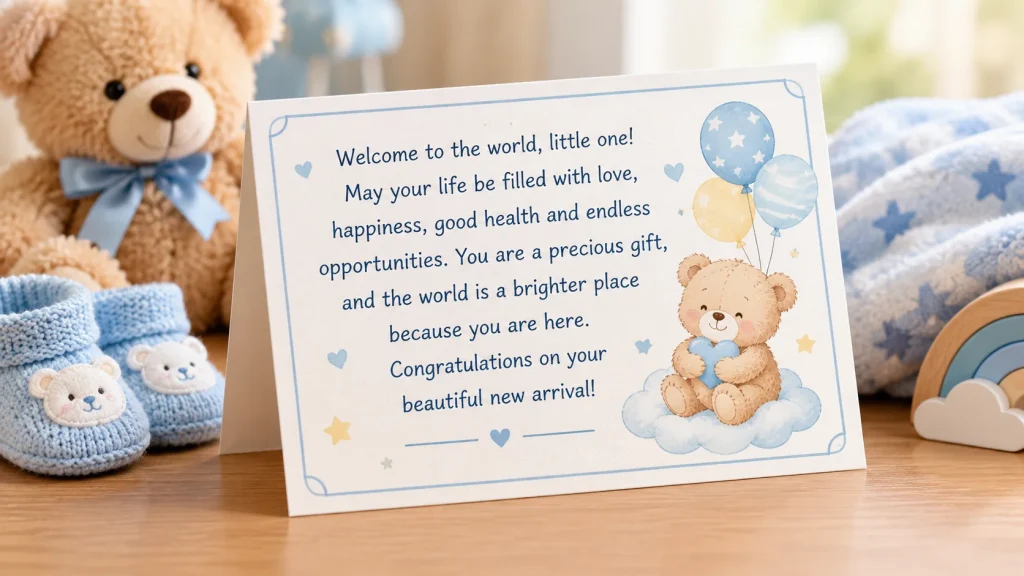
- “Welcome to the world, little one. Your family loved you long before you arrived. Love, Aunt [Name].”
- “Dear [Name], you’ve made our family bigger and our hearts lighter. We’re already counting the days until the first hug. Love, Grandma and Grandpa.”
Baby Shower Cards
A shower card arrives before the baby does, so the mood is anticipation. At a shower, what to write in a baby card is mostly a matter of matching the energy in the room, then adding one practical or personal touch.
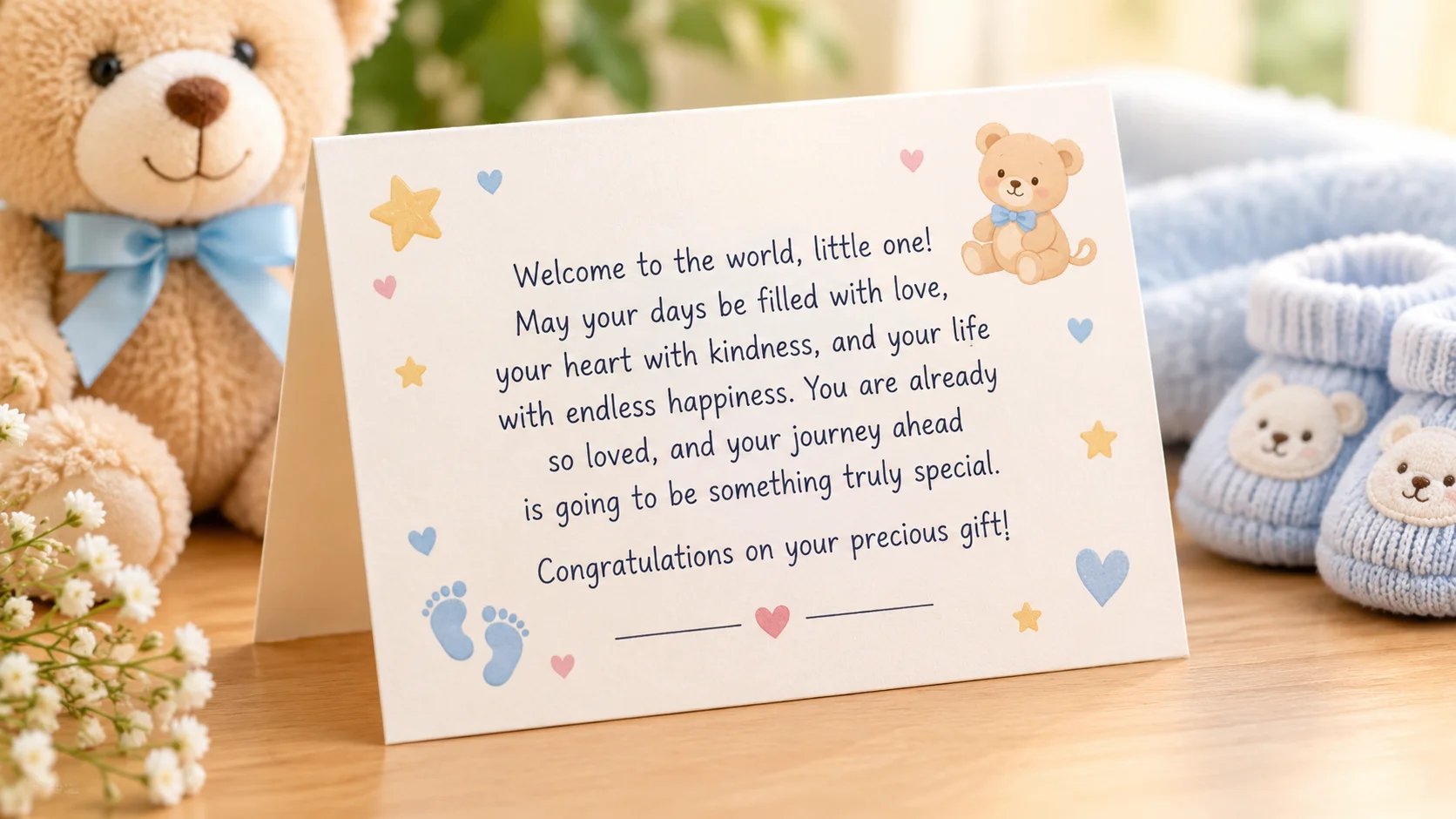
- Playful
“Enjoy the sleep while it lasts. Congratulations on the little one on the way.”
- Warm
“Wishing you a calm last few weeks and a smooth arrival. Everyone’s so happy for you.”
- Practical
“A little something for the nursery. Text me when you’d like a home-cooked meal.”
- Short
“So happy for you both.”
Pick the one that sounds most like you. A short line that fits the sender beats a clever one that doesn’t.
Newborn Cards After the Birth
Once the baby has arrived, the parents are usually worn out, thrilled, and busy. After the birth, what to write in a baby card changes a little: less about the future, more about easing the present.
A message like this works well: “Congratulations on your baby. No need to reply or host visitors. I’m happy to drop off a meal whenever you’re ready.”
An offer is only worth writing if it will actually be followed through. Specific help (a meal, a grocery run, an hour of quiet company) is more useful than “let me know if you need anything.”
Baptism and Blessing Cards
Faith-based wording fits only when the family’s tradition clearly includes it. If it does, keep the language simple and personal rather than reaching for formal phrases.
- “Congratulations on [Name]’s baptism. Wishing your family joy today and in the years ahead.”
- “May [Name] grow up surrounded by love and faith. Thinking of you all on this day.”
If there’s any doubt about the family’s beliefs, a warm, general message about love and good wishes is the kinder choice.
What to Skip
Knowing what to write in a baby card also means knowing what to leave out. A few habits can sour an otherwise kind message:
- Comments on who the baby looks like. Parents may have complicated feelings about it.
- Unrequested parenting advice, even when it’s well meant.
- Assumptions about gender, names, or plans for more children.
- Sleep jokes for parents who may already be struggling.
Parenthood doesn’t always arrive easily, and a card doesn’t need to mention how it got there. “So happy for you” fits everyone.
Quick Ways to Personalize
A small detail turns a standard message into one worth keeping. Try one of these:
- Use the baby’s name at least once.
- Mention something you know about the parents, like a shared joke or a moment you remember.
- Offer one specific piece of help instead of a general promise.
- Read the message aloud before writing it in ink.
Final Verdict
A baby card doesn’t need clever wording. It needs warmth, a name, and one honest detail. Start with congratulations, add a wish for the little one, and offer something real, like a meal or a quiet visit when the parents are ready. Keep the message shorter for coworkers and a bit more playful for close friends, and save the gentle, careful tone for families going through anything difficult. When in doubt about what to write in a baby card, trust the simplest sincere line you can think of. Parents will remember who showed up with kind words far longer than they’ll remember how polished the sentence was.