


Knowing what to write in a sympathy card for loss of father is hard for a simple reason: nothing feels big enough. The loss of a parent changes a person’s life, and a few lines on a folded card can seem too small to matter. So the pen hovers, and the card sits on the table for days.
Here’s some relief. A condolence message doesn’t need to be clever, poetic, or long. It needs to be kind, honest, and sent. The right words depend on three things: how close you are to the person, whether you knew their father, and how formal the relationship feels. A message to a lifelong friend sounds different from a note to a coworker, and both can be right.
This guide breaks the task into small pieces. There’s a simple three-line formula, sample messages for different relationships, wording for people who never met him, and a short list of phrases worth skipping. Copy anything that fits, or change the details until it sounds like you.
What to Write in a Sympathy Card for Loss of Father: A Three-Line Formula
Most good condolence messages follow the same quiet shape. Open with the loss, add a line of care, and close with an offer or a simple wish. Three short lines are plenty.
Line one: acknowledge the loss.
- “I was so sorry to hear about your father.”
- “Thinking of you and your family after your dad’s passing.”
Line two: add care or a memory.
- “You’ve been on my mind every day.”
- “He always had a kind word for everyone, and I’ll remember that.”
Line three: close gently.
- “No need to reply. I’m here whenever you’d like company.”
- “I’ll call next week, only if you feel like talking.”
Put together, it might read: “I was so sorry to hear about your father. He always had a kind word for everyone, and I’ll remember that. No need to reply; I’m here whenever you’d like company.”
Use the same word the person uses. If they say “dad,” write “dad.” If they say “father,” follow their lead.
Messages by Relationship
The best answer to what to write in a sympathy card for loss of father changes with who’s signing it. Closeness sets the tone more than anything else.
From a Close Friend
Friends can be warmer and more direct. A specific offer helps more than a general one.
- “I’m so sorry about your dad. I love you, and I’m bringing dinner on Thursday. You don’t have to talk unless you want to.”
- “I’m in this for the long haul, not just this week. Call me at any hour.”
From a Coworker or Manager
Short and respectful works best. Mention practical support only if it’s real.
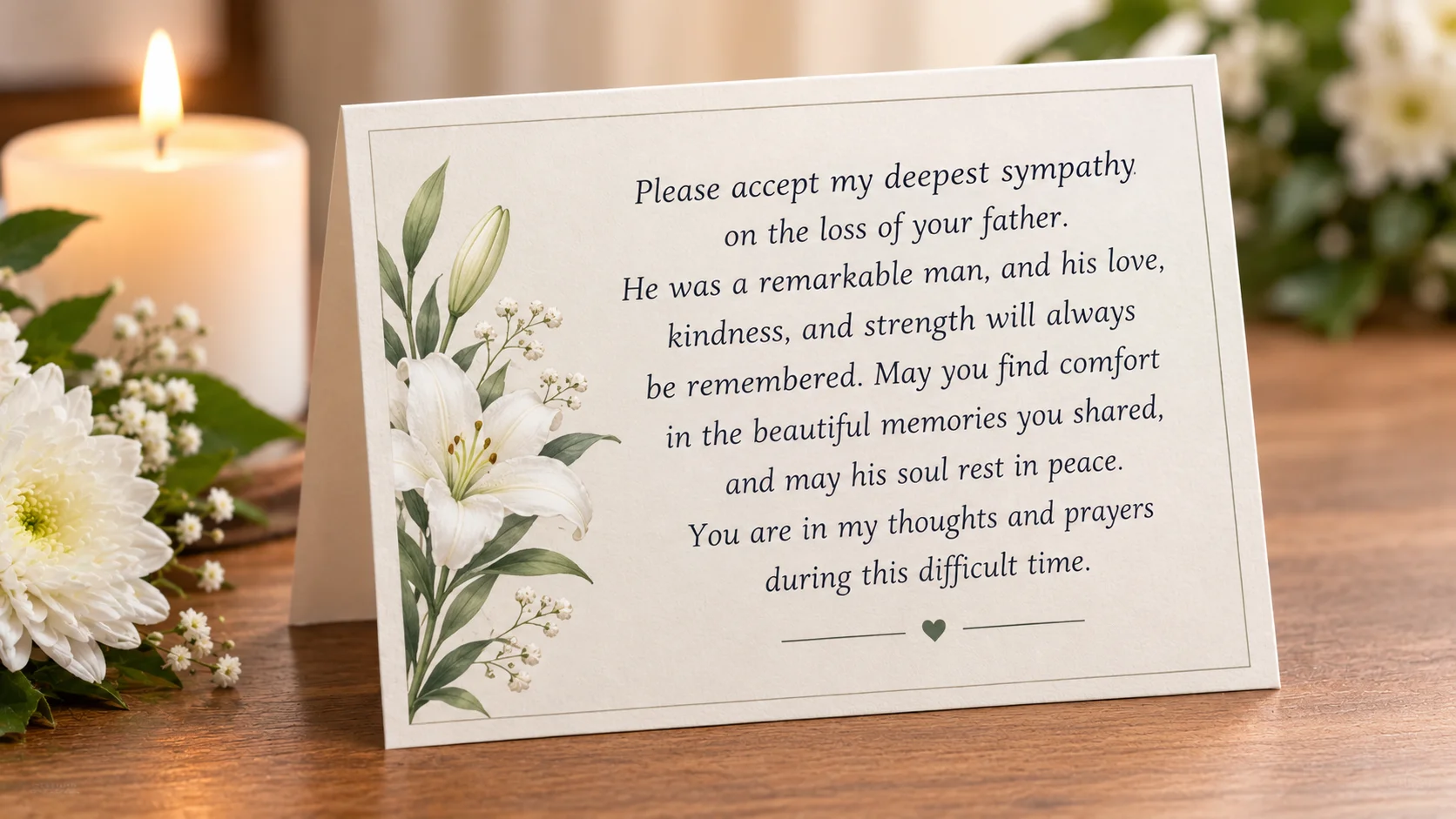
- “Please accept my condolences on the loss of your father. Take all the time you need; your projects are covered.”
- “Sending my sympathy to you and your family.”
From a Neighbor or Acquaintance
- “I was sorry to learn of your father’s passing. Thinking of your family this week.”
From Extended Family
- “Uncle [Name] meant a great deal to all of us. We’re holding your family close. Love, [Name].”
When You Knew Him
One specific detail beats a general compliment. A habit, a joke, or a kindness is enough. Keep it to a sentence or two so the card stays gentle.
- “Your dad’s laugh could fill any room. I’m grateful I knew him.”
- “He gave me my first job and trusted me before I’d earned it. I’ll always be thankful. Thinking of you and your family.”
- “I still remember [a shared memory]. He made everyone feel welcome.”
When You Never Met Him
Not having met him isn’t a barrier. Keep the focus on the person reading the card, and avoid inventing details about him.
- “I never had the chance to meet your father, but I know how much he mattered to you. I’m so sorry for your loss.”
- “Thinking of you. If you ever want to share stories about him, I’d love to hear them.”
This is also where many people stall on what to write in a sympathy card for loss of father. The fix is simple: say you’re sorry and say you’re thinking of them. That’s a complete message.
Faith-Based and Secular Wording
Religious language fits only when the person clearly shares that faith. If they do, keep it plain: “May God give you comfort and peace in the days ahead.”
For a mixed or unknown audience, neutral wording is safer: “Wishing you peace and support as you remember him.” A secular option works too: “He clearly raised a kind person. Thinking of you.”
Quoting a verse or a poem is fine, but copy it from a reliable source and credit it. Paraphrasing from memory can introduce mistakes.
Words to Skip
A few common phrases can land badly, even when they’re well meant. Try swapping them.
Instead of: “He’s in a better place.”
Try: “I’m so sorry. He’ll be missed.”
Instead of: “Everything happens for a reason.”
Try: “There are no right words, but I’m here.”
Instead of: “I know exactly how you feel.”
Try: “I can’t know what this is like, but I’m thinking of you.”
Instead of: “Let me know if you need anything.”
Try: “I’m dropping off groceries Saturday. Text me what you’d like.”
Late Cards and Short Notes
A late card still counts. Anyone unsure what to write in a sympathy card for loss of father weeks or months afterward can name the delay in one line and move on.
- “I’m sorry this is late. I’ve thought of you and your family often since your father passed.”
Short card messages work well for busy schedules or distant relationships:
- “Thinking of you.”
- “So sorry about your dad. Here for you.”
The Days That Come Later
Grief doesn’t end after the funeral. The first Father’s Day, his birthday, or the anniversary of his death can be heavy days. A brief card around those dates shows he hasn’t been forgotten.
“Thinking of you today. I’m remembering your dad too.”
That’s enough. There’s no need to say more.
Before You Sign
Deciding what to write in a sympathy card for loss of father gets easier with a few habits:
- Keep it to two to four sentences.
- Write by hand if possible.
- Use his name, if you knew him.
- Offer only help you’ll actually give.
- Read the message aloud before writing it in ink.
Final Verdict
The best condolence card is the one that gets sent. Open with the loss, add one line of care, and close with a simple offer or wish. Use a real detail if you knew him, and keep the focus on the person reading if you didn’t. Skip the phrases that explain or fix the loss, and match the tone to your relationship. When doubt creeps in about what to write in a sympathy card for loss of father, go back to the plainest true sentence: you’re sorry, and you’re thinking of them. Sign it, mail it, and trust that kind words from a real person will be remembered.