


Working out what to write on a funeral card is one of the hardest small tasks there is. The loss is large, the card is small, and nothing on the page seems big enough to match either. Many people hold the pen for a long time, then put it down, afraid that the wrong words will make things worse.
A good message doesn’t need to fix anything. It only needs to show that someone noticed and cares. The right tone depends on the relationship, how well the sender knew the person who died, and how close the sender is to the family. A note to a best friend can be personal. A note to a coworker or neighbor stays gentle and brief.
This guide covers a simple structure, messages for different relationships, ways to share a memory, and a few phrases better left out. Every sample can be copied or adapted. Plain wording is enough. Short is fine. A few sincere lines will do more than a long, polished verse.
What to Write on a Funeral Card: A Simple Structure
Most good messages follow the same short pattern. Say sorry for the loss. Mention the person by name when possible. Offer something real, like a memory or a bit of company. Close simply.
That’s the whole structure. A card with those pieces is complete whether it runs two lines or six.
Using the person’s name shows the message is about them, not about loss in general. If the name isn’t known, “your family” works. “I’m so sorry” is always a good place to begin.
Where the card goes
Funeral cards come in a few forms: a card tucked in with flowers, a card signed at the service, or a card mailed in the days after. The wording stays much the same. A card with flowers can be very short, since the flowers are part of the message. A card left at the service can mention being there. A mailed card has room for a little more.
How long should it be?
Two to four sentences suit most cards. A close relationship can run longer. A card attached to a crowded table of flowers might only have room for one line, and that’s fine.
Short card messages
Short card messages suit a group card, or a family the sender doesn’t know well.
I’m so sorry for your loss. Thinking of you.
Thinking of you and your family at this time.
Wishing you comfort and peace in the days ahead.
With deepest sympathy.
Messages for Different Relationships
The closer the relationship, the more personal the message can be. Distance calls for warmth and brevity.
From a close friend
I’m so sorry about [Name]. I’m thinking of you today. No need to reply. I’m here whenever you want company, or quiet.
From a coworker or boss
A workplace note can also make clear that time off isn’t a worry.
I was so sorry to hear about your loss. Please take all the time you need. Thinking of you and your family.
From a neighbor
Thinking of you and your family. If it helps, I’d be glad to drop off a meal this week. No need to answer.
To a sibling or relative
I’m so sorry about [Name]. They mattered to so many of us, and I’m thinking of you. I’m here whenever you want to talk or just sit.
From a group or team
The whole team is thinking of you. Take the time you need. We’ve got things covered here.
When the person was never met
Anyone unsure what to write on a funeral card for someone they never met can keep the focus on the friend.
I never had the chance to meet [Name], but I know how much they meant to you. I’m so sorry, and I’m thinking of you.
For Different Kinds of Loss
The loss of a parent, a spouse, a friend, or a child each calls for slightly different wording, though the structure stays the same.
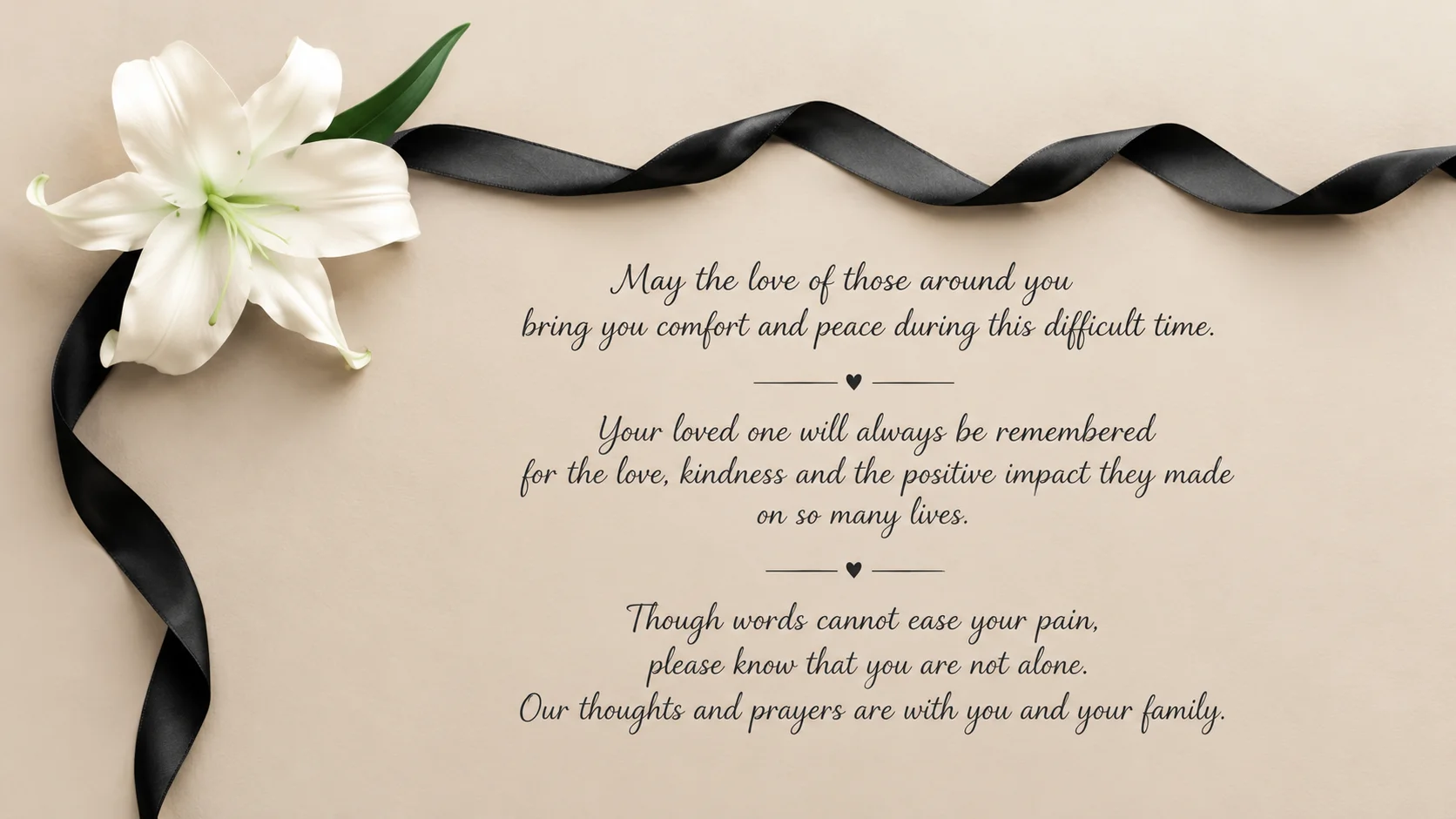
A parent
I’m so sorry about your mom. Thinking of you and your family this week, and here if you need anything.
A spouse or partner
A message here can be plain and steady. There’s no need to say more than the sender knows.
I’m so sorry about [Name]. I’m thinking of you, and I’m only a call away.
A friend or colleague
[Name] was a good presence in so many of our days. I’m sorry, and I’m thinking of you.
A child or young person
Very few words are best here. Nothing needs explaining.
There are no right words for this. I’m so sorry, and I’m thinking of you.
Sharing a Memory
A short memory can be one of the kindest things in a card. Keep it brief, specific, and gentle: something the person said, a habit, or a kindness the sender saw.
Anyone stuck on what to write on a funeral card can finish one sentence, like “I’ll always remember…”, then trim it. One true sentence is plenty. If no memory comes to mind, it’s fine to skip this step.
I’ll always remember how [Name] [a specific memory]. I’m so sorry for your loss.
[Name] made everyone feel welcome. I’m grateful I got to know them, and I’m thinking of you.
When the Relationship Was Complicated
Not every relationship is simple, and a sender may not know how the person feels. When it’s unclear, the message can stay about the person and leave the loss itself unexplained.
Thinking of you and wishing you comfort in the days ahead. No need to reply.
What to Leave Out
A few lines are meant kindly but can land badly: “they’re in a better place,” “at least they’re not suffering,” “everything happens for a reason,” “I know how you feel,” and “stay strong.” They can feel dismissive, or assume beliefs and circumstances the sender can’t know.
Questions about how the person died are better left out too. So is “let me know if you need anything,” which puts the work on the person grieving. A specific offer, like a meal or a ride, can be easier to accept.
Faith-Based Wording
Faith-based wording fits only when the sender knows the family shares that tradition. Without that, wording that doesn’t assume any belief is the safer choice.
Keeping you and your family in my thoughts and prayers.
Holding you and your family in my thoughts.
Cards in the Months After
A second card weeks or months later can be a kind touch, since early attention can fade. Birthdays, anniversaries, and holidays can be hard dates, and a short note on one of them can mean a lot.
The same plain approach to what to write on a funeral card works for these later cards: short, warm, and no pressure to answer.
Thinking of you today. No need to reply. [Name] is remembered, and so are you.
Thank-You Notes After a Funeral
For the family receiving cards, there’s no deadline for thank-you notes, and a short message is enough. Naming the kindness is all it needs.
Thank you for coming, and for the card. It was good to see you there.
Making the Message Sound Like the Sender
The best answer to what to write on a funeral card is usually the simplest thing the sender can say honestly. Reading the message out loud helps. If it doesn’t sound like something the sender would really say, it can be simplified.
A plain closing such as “With love,” “Thinking of you,” or “With sympathy” finishes the card. A rough draft on scrap paper takes the pressure off before the real card is written. Handwriting counts, even when the words are short.
Final Verdict
There’s no perfect line waiting to be found. Knowing what to write on a funeral card comes down to a few small things: say sorry, name the person if possible, and add one honest detail or offer.
Keep it short if the words feel stuck. Skip the clichés, and leave out advice about how to grieve. A plain “I’m thinking of you” is never wrong.
A funeral card doesn’t need to be polished. It needs to be gentle, and sent by someone who took a minute to think of the person. Choose a sample, swap in a real detail, and sign it.