
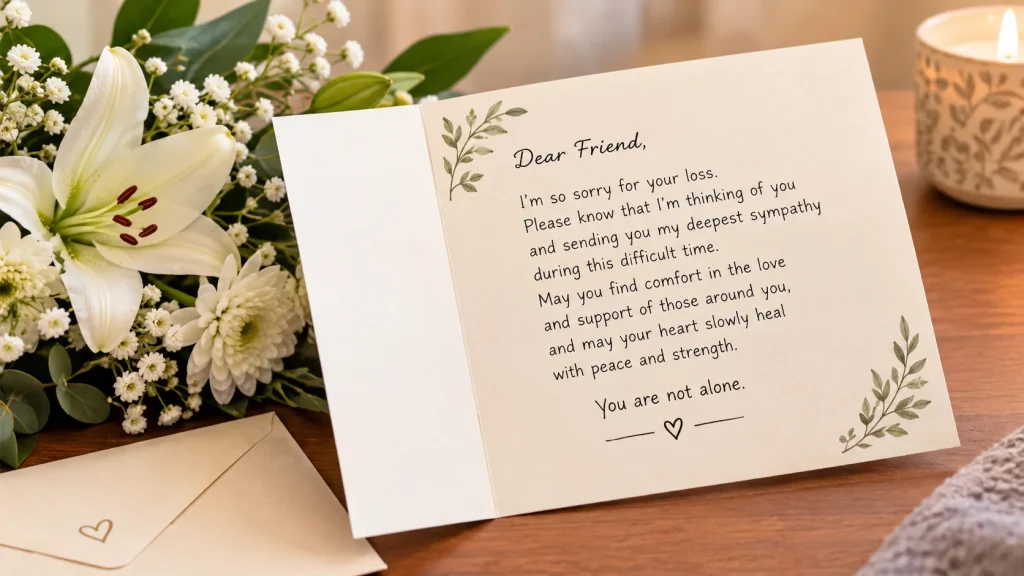

Knowing what to write in a sympathy card to a friend is harder than writing to almost anyone else. A friend isn’t a distant relative or a coworker, so a formal line sounds cold. Yet a long emotional speech can feel like too much when someone is barely holding the day together. The card sits there, and the days pass.
The trouble is that nothing feels big enough. There’s no sentence that fixes a loss, and trying to find one is what stalls most people. A better goal is smaller: let the friend know they’re on someone’s mind and that they don’t have to face the week alone.
The right words depend on what was lost, how close the friendship is, and how soon the card is being sent. This guide covers each of those, with ready-to-use messages, a few phrases to skip, and simple ways to make a short note sound like it came from a real friend. Take what fits and change the rest.
What to Write in a Sympathy Card to a Friend: A Simple Pattern
Most good sympathy messages share the same quiet shape: name the loss, offer care, and close with something small and real. Three short lines are plenty.
Name the loss: “I was so sorry to hear about [Name].”
Offer care: “You’ve been on my mind all week.”
Close gently: “No need to reply. I’m here whenever you’d like company.”
Put together, it reads like this:
“I was so sorry to hear about [Name]. You’ve been on my mind all week. No need to reply; I’m here whenever you’d like company.”
For anyone stuck on what to write in a sympathy card to a friend, this pattern is a safe place to start. Use the same word the friend uses. If they say “mom,” write “mom,” not “mother.”
Messages by Type of Loss
The wording shifts a little depending on who died. Keep every message focused on the friend, and skip any attempt to explain the loss.
Loss of a Parent
- “I’m so sorry about your mom. She always made me feel welcome, and I’ll remember that. Call me anytime.”
- “Thinking of you and your family after your dad’s passing. I’m here, whatever you need.”
Loss of a Spouse or Partner
Practical offers tend to help more than general ones here.
- “I’m so sorry about [Name]. Thinking of you every day. I’ll check in this weekend, and I’d be glad to bring dinner or just sit with you.”
Loss of a Child
No sentence can fix this, so none should try. Short and loving is enough.
- “I’m so sorry. Holding you and [Name]’s memory close. I’m here.”
Loss of a Sibling
- “I’m so sorry about your brother. I’m here to listen, or to sit nearby and say nothing. Whatever helps.”
Loss of a Pet
A card for this loss is never too much. Pets are family to many people.
- “I’m so sorry about [Pet’s name]. They were lucky to have you.”
Match the Message to the Friendship
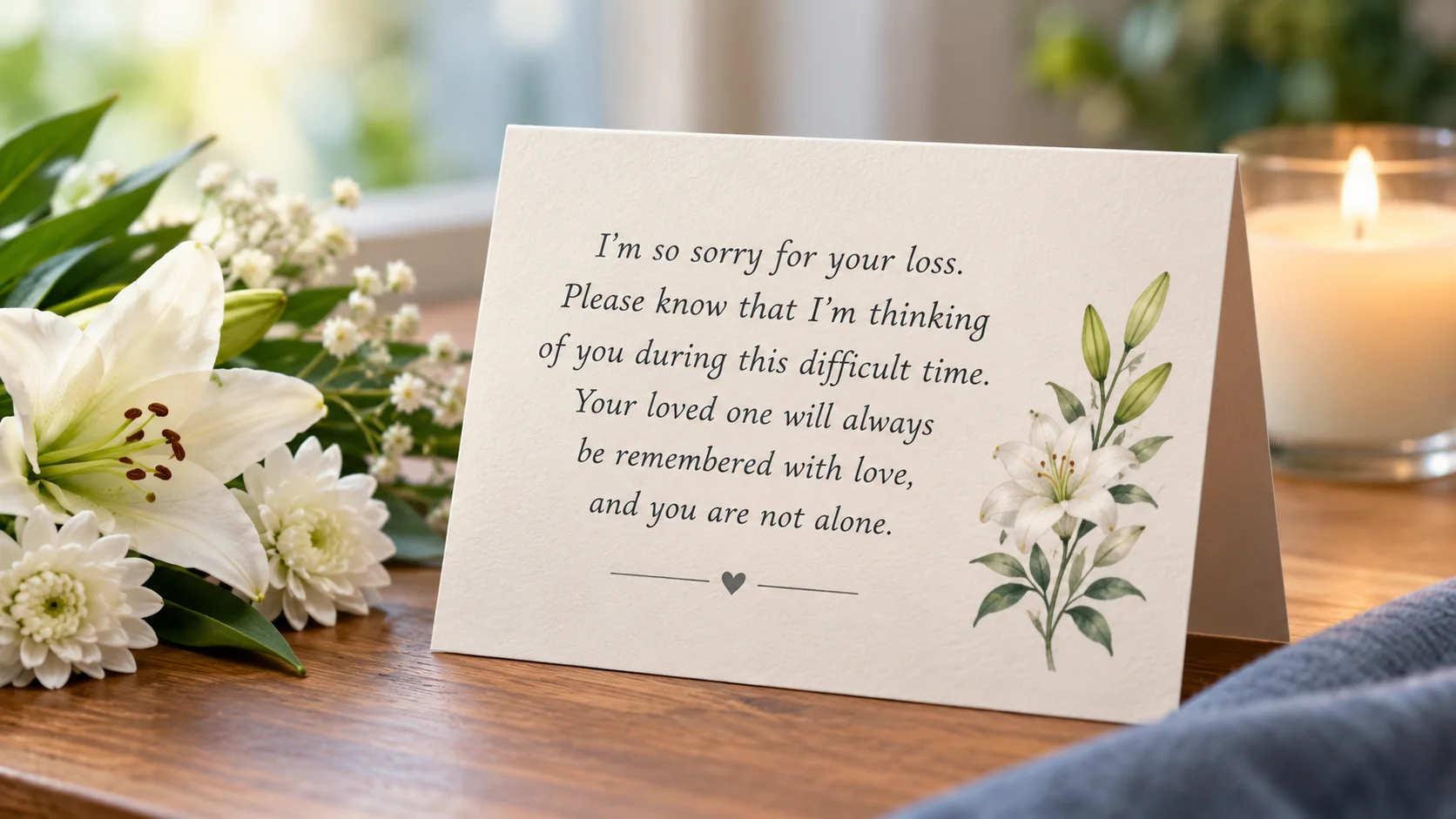
Closeness decides how much to say when working out what to write in a sympathy card to a friend. A lifelong friend can be direct. A newer friend is better off warm and simple.
A Close Friend
Specific offers beat general ones.
- “I’m coming Thursday with dinner. You don’t have to talk unless you want to. Love you.”
A Friend You’ve Lost Touch With
- “I heard about your loss and wanted you to know I’m thinking of you. No need to reply. Wishing you comfort and support.”
A Friend From Work
- “I’m so sorry for your loss. Take all the time you need; I’ll cover your projects.”
Someone Grieving a Person You Never Met
Not having met the person isn’t a barrier. Keep the focus on the friend and avoid inventing details.
- “I never got to meet [Name], but I’m so sorry. If you ever want to tell me about them, I’d love to listen.”
When to Send the Card
Timing matters less than most people fear, but it does shape the wording.
Right Away
Within the first week or two is ideal. Keep it short, since a few lines are all anyone can take in at that point.
A Few Weeks Later
Visitors and calls often thin out once the funeral is over, so a card at that stage can be especially welcome. Anyone unsure what to write in a sympathy card to a friend weeks after the loss can simply say they’re still thinking of them.
- “Thinking of you. I know the first days are behind us, but you’re still on my mind. No need to reply.”
On a Hard Date
A birthday, an anniversary, or a first holiday can be heavy. A brief note shows the person hasn’t been forgotten.
- “Thinking of you today and remembering [Name] with you.”
A Late Card
A late card still counts. One line about the delay is enough.
- “I’m sorry this is late. You’ve been in my thoughts since I heard.”
Faith-Based and Secular Wording
Religious wording fits only when the friend clearly shares that faith. A plain, original line works: “May God give you comfort and peace in the days ahead.”
For anyone whose beliefs aren’t known, a neutral wish keeps the warmth without assuming anything: “Wishing you peace and support as you remember [Name].”
If a verse or poem goes inside, copy it from a reliable source and credit it. A line recalled from memory can introduce mistakes.
Phrases to Skip
A few lines can land badly, even when they’re well meant:
- “They’re in a better place.”
- “Everything happens for a reason.”
- “I know exactly how you feel.”
- “At least they lived a long life.”
- “Let me know if you need anything.”
That last one puts the work on the grieving person. Name something specific instead, such as a meal, a grocery run, or a ride.
Also avoid telling the friend how they feel or how they should cope. Grief looks different for everyone, and “You must be devastated” or “You’re so strong” can both miss the mark. “I’m so sorry. I’m here.” covers it.
Card, Text, or Both?
A text is quick and welcome. A handwritten card can be reread and kept. When there’s time, send both: the text right away, the card a little later.
Making It Sound Like You
Still unsure what to write in a sympathy card to a friend? Add one true detail. A habit of the person who died, a kindness remembered, or a moment shared with the friend can turn a general line into a personal one. Keep it to a sentence or two.
A few small habits help:
- Use the friend’s name at the top of the card.
- Write the way you’d speak to them, not the way a card is supposed to sound.
- Offer only help that will actually be given.
- Read the message aloud before writing it in ink.
Short card messages are completely fine here. “Thinking of you. So sorry. Here for you.” is a full message when it’s signed by someone who means it.
Final Verdict
A sympathy card to a friend doesn’t need perfect wording. It needs a name, a plain sentence of care, and one offer that will actually be kept. Match the tone to the friendship, send it soon if possible, and send a second note later when the quiet sets in. Leave out lines that explain or fix the loss. When doubt returns about what to write in a sympathy card to a friend, go back to the simplest true version: you’re sorry, you’re thinking of them, and you’re there. Sign it by hand, put it in the mail, and trust that a few honest words will be kept.